

The short answer
Colour mixing for kids can be as simple as squishing two blobs of paint together inside a sealed sandwich bag. Start with two colours at a time, such as yellow and blue, and ask your child to guess what will happen before you mix. From around three, many children love predicting, mixing and naming new colours, which builds both colour words and early scientific thinking.
There is a particular face a child makes the first time yellow and blue turn into green under their fingers. Eyes wide, mouth open, then an urgent "Again!" Colour mixing is one of the simplest experiments you can do at home, and one of the most magical.
It is also quietly educational. Mixing colours gives children new colour words, practice at predicting and checking, and a first taste of the idea that you can change things and see what happens. This guide covers colour mixing for kids from toddlers to preschoolers, with messy and mess-free versions, and how to talk about it so the learning sticks.
Why colour mixing is worth the mess
It turns colour into something that changes
Toddlers often treat colour words as fixed labels for things: the red car, the green frog. Mixing shows that colours can blend into each other, which is exactly the tricky part of learning colours. Seeing yellow slowly turn green as you add blue helps children feel where one colour ends and another begins. If your child is still sorting out colour names, our guide on when toddlers learn colours explains why that takes time.
It is real science, at toddler scale
Guess, try, look, talk about it: that is the scientific method in miniature. In a study of how preschoolers learn shapes, playful activities where an adult gently guided, asked questions and let the children discover taught more than either free play or simply telling (Fisher and colleagues, 2013). Colour mixing is a natural setting for the same kind of guided play.
It is play, and play matters
The American Academy of Pediatrics describes play as central to healthy development, supporting thinking skills and the bond between parent and child (Yogman and colleagues, 2018). Squishing paint together on a rainy afternoon counts.
A quick colour guide for grown-ups
With paints, crayons and playdough, these are the classic results:
| Mix | You get |
|---|---|
| Yellow + blue | Green |
| Red + yellow | Orange |
| Red + blue | Purple |
| Any colour + white | A lighter version (pink from red, sky blue from blue) |
| Any colour + a tiny bit of black | A darker version |
| Lots of colours together | Brown or grey |
Real paints vary, and some reds and blues make a muddy purple. Bright, clean colours give the clearest results. (Light mixes differently from paint, which is why screens and stage lights follow other rules, but that can wait for later.)
Colour mixing activities by age
For toddlers (about 2 to 3): squish and see
At this age, it is mostly about the feel and the surprise. Keep words simple: "Yellow… and blue… look, green!"
- Paint in a bag. Put a blob of yellow and a blob of blue paint in a strong zip-lock bag, squeeze out the air, seal it and tape the top. Your child presses and squishes until the colours meet. Taped to a window, it glows.
- Finger paint. Two colours on a large sheet of paper, little hands in the middle.
- Playdough twist. Roll a small yellow ball and a small blue ball together and keep kneading until they turn green. It takes a while, which is part of the fun.
For preschoolers (about 3 to 5): guess, mix, check
Now children can start predicting. The CDC lists naming a few colours of items among the milestones most children reach by about four (CDC), so mixing becomes a lovely way to stretch that vocabulary.
- Coloured water cups. Fill clear cups with water and add a drop of food colouring to each: red, yellow, blue. Your child uses a pipette or spoon to move colour from cup to cup. Ask, "What do you think will happen?"
- Paper towel walk. Place cups of coloured water in a row with an empty cup between each pair, and drape strips of kitchen paper from cup to cup. Over a few hours, the colours travel and meet in the empty cups. A slow, wonderful experiment.
- Lighter and darker. Start with one colour and add white, a little at a time, painting a stripe after each addition. You end up with a beautiful strip of shades and new words like "light" and "dark".
- Ice melt. Freeze coloured water in an ice cube tray. Let your child place two different cubes in a bowl and watch them melt together.
- Cellophane windows. Overlap sheets of coloured cellophane or transparent plastic and hold them up to the light.
How to talk about colour mixing
The conversation matters as much as the paint. Harvard's Center on the Developing Child calls this kind of back-and-forth "serve and return": your child notices something, and you respond and build on it (Harvard).
- Ask for a guess first. "We have yellow and blue. What colour might we make?" Any answer is fine.
- Mix slowly. Add a little at a time so your child sees the change happen.
- Name what you see. "It's turning green. A yellowy green. Now it's darker green."
- Check the guess. "You thought it might be purple. It's green! Isn't that surprising?"
- Try it backwards. "Can we make orange? Which colours do you think we need?"
There are no wrong guesses here. The point is noticing, not getting it right.
Keeping it calm and safe
- Choose child-safe materials. Use paints and playdough labelled as suitable for your child's age, and stay close by with toddlers who still put things in their mouths.
- Protect the space. An old shower curtain, a tray with a lip or the bath itself makes clean-up easy.
- Dress for it. An old T-shirt worn back to front makes a fine apron.
- Keep it short. Ten happy minutes beat forty frustrated ones. Stop while it is still fun.
- Expect brown. Children love adding "just one more colour". Brown is part of the experiment.
Common mistakes
Too many colours at once. Start with just two. With five pots open, everything becomes brown within a minute.
Telling instead of asking. "Yellow and blue make green" is a fact to remember. "What happens if we mix these?" is a discovery to treasure.
Worrying about the result. A muddy painting is not a failed activity. The learning is in the doing.
The short version
- Colour mixing teaches new colour words, prediction and early science through play.
- Toddlers enjoy squishing paint in sealed bags; preschoolers love guessing and checking.
- Mix two colours at a time for clear results, and expect brown when everything goes in.
- Ask, wait, name what you see and enjoy the surprise together.
Next, read our full guide to teaching colours and shapes to toddlers, or try planting something colourful with our guide to growing seeds with kids.
Questions parents ask
What age can children start colour mixing?
Toddlers can enjoy squishing paint in a sealed bag or swirling finger paint from about two, mostly for the sensory fun. Predicting and naming the new colours tends to click from around three to four, once a few colour words are settled.
Which colours should we mix first?
Yellow and blue (making green) is a satisfying first mix because the result is clear and surprising. Red and yellow (orange) and red and blue (purple) come next. Use bright, clean colours and roughly equal amounts.
Why does our mixing always turn brown?
Mixing three or more colours, or adding a little of everything, tends to make brown or grey. That is a great discovery in itself. For clearer results, mix only two colours at a time and use fresh paint for each experiment.
How can I do colour mixing without mess?
Put two blobs of paint in a strong zip-lock bag, seal it, tape it to a table or window and let your child squish the colours together. Coloured water in clear cups, or overlapping coloured cellophane, are also tidy options.
Sources
We link to the guidance we rely on so you can read it yourself.
- Yogman, M. et al. (2018). The Power of Play: A Pediatric Role in Enhancing Development in Young Children. Pediatrics, 142(3)
- Harvard Center on the Developing Child: Serve and return
- CDC: Milestones by 4 years (Learn the Signs. Act Early.)
- Fisher, K. R. et al. (2013). Taking shape: Supporting preschoolers' acquisition of geometric knowledge through guided play. Child Development, 84(6)
Written by the Cloudy Isle editorial team at TRN Games: parents and game makers, not doctors. This guide is general information; for questions about your own child's health or development, talk to your paediatrician or health visitor.
Keep reading
Complete guide · 10 min read
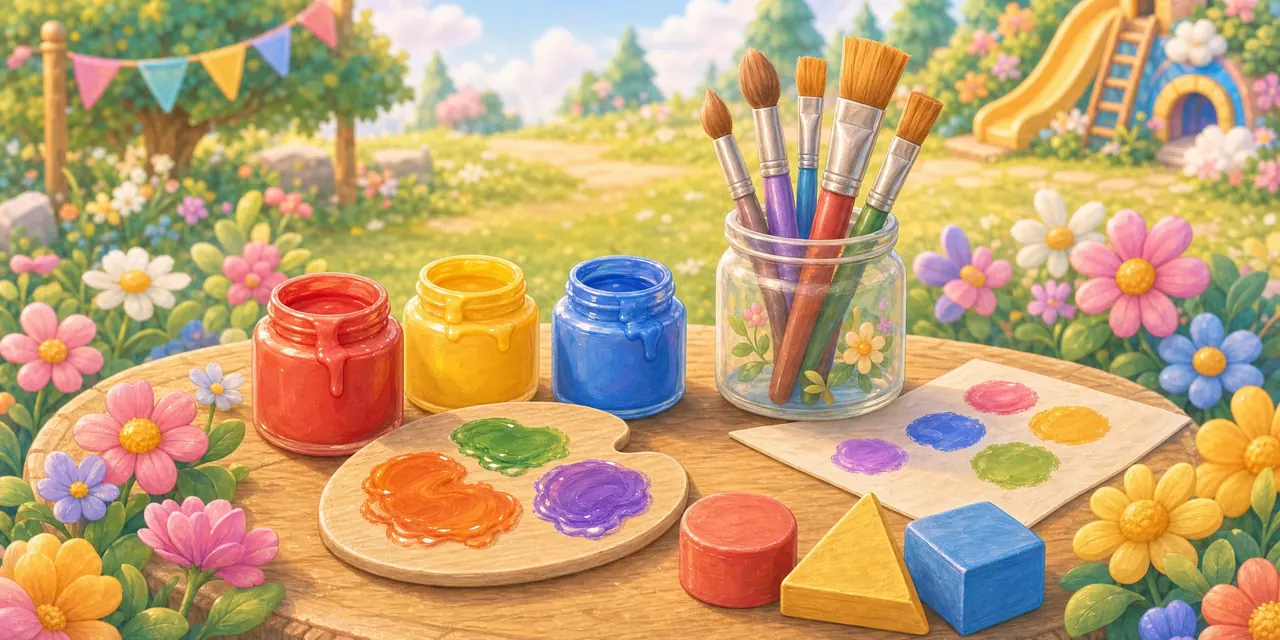
Teaching Colours and Shapes to Toddlers: A Calm, Playful Guide
Teaching colours and shapes to toddlers works best through everyday talk and play, not drills. Name one colour or shape at a time in real objects, compare it with…
Guide · 6 min read
When Do Toddlers Learn Colours? What's Typical, Age by Age
Many toddlers start saying colour words around two, but usually use them loosely, calling lots of colours by one favourite name. Reliably naming several colours tends to…
Guide · 6 min read
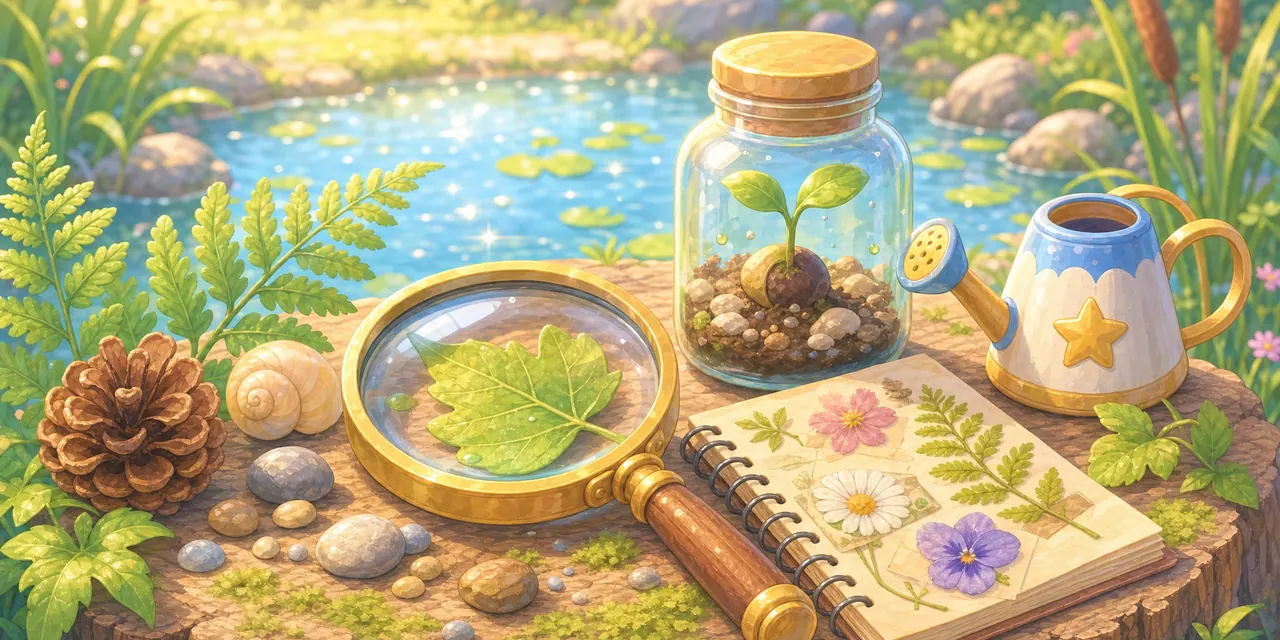
Growing Seeds with Kids: An Easy, Safe Windowsill Guide
Choose big, fast seeds such as beans, sunflowers or peas, plant them in a clear jar or small pot, and check them every day together. Within a week or two you will…


